
By
Dr. Kayode Omolayo
skomolayo@gmail.com
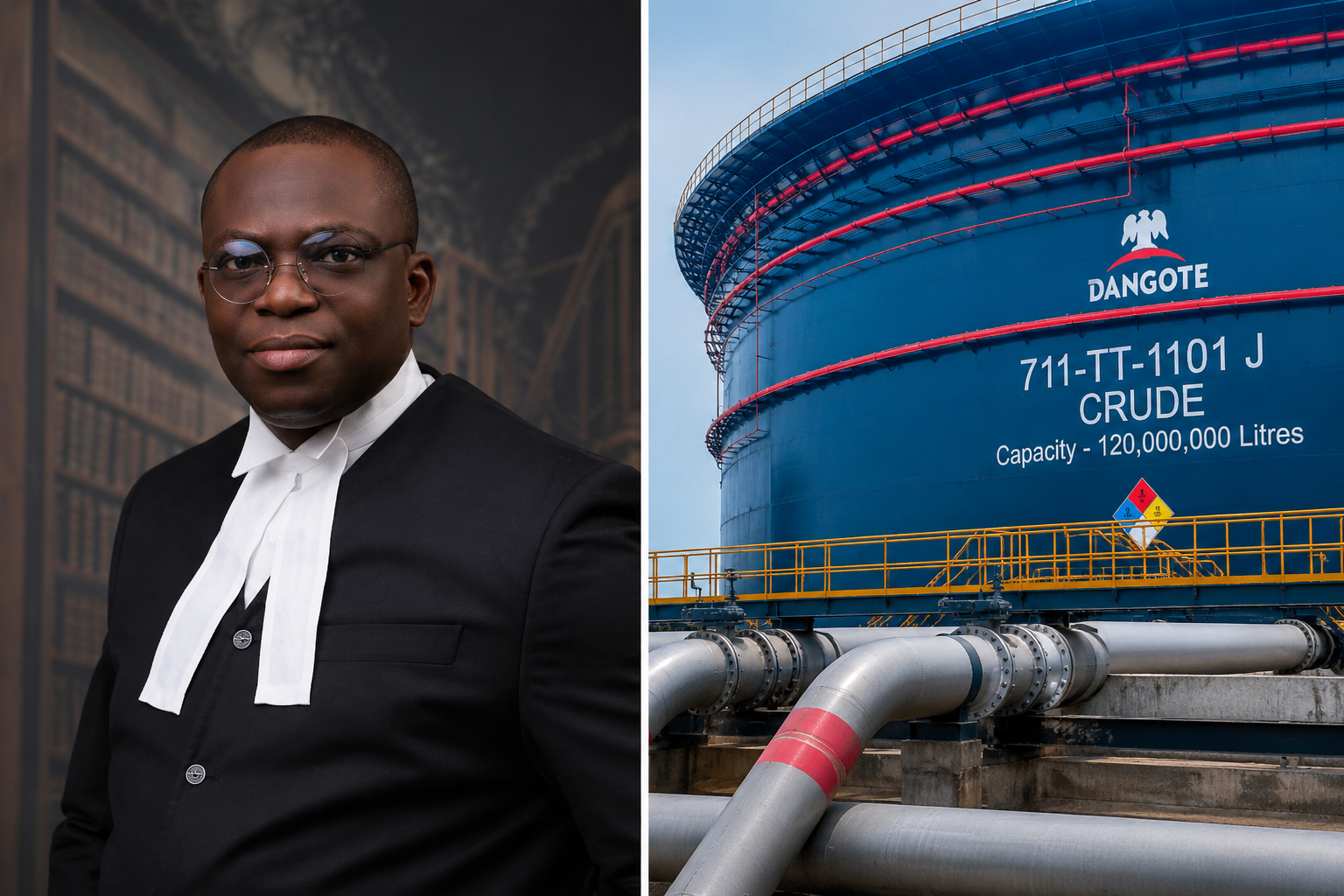
The Dangote Petroleum Refinery stands today as one of the greatest industrial achievements in Nigeria’s history. Yet, for millions of Nigerians struggling daily with the high cost of living, one question continues to echo across homes, filling stations, markets, and public debateshomes: Is the Dangote Refinery truly a friend of Nigerians, or has it become another powerful institution profiting from the suffering of the people? As a concerned Nigerian who has witnessed decades of fuel scarcity, endless queues, subsidy scandals, and the national embarrassment of importing refined petroleum despite being one of Africa’s largest crude oil producers, I approach this question with both admiration and disappointment.

For over forty years, Nigeria wasted trillions of naira maintaining four government-owned refineries that produced little or nothing. Successive administrations announced countless “Turn Around Maintenance” programmes, yet the refineries remained largely dormant while politically connected importers made fortunes importing fuel into a country blessed with abundant crude oil. The fuel importation regime became one of Nigeria’s biggest drains on foreign exchange and one of the most lucrative avenues for corruption.
Against this backdrop, Aliko Dangote embarked on what many considered an impossible mission. Investing more than $19 billion, he built what is now regarded as the world’s largest single-train refinery. The project survived regulatory bottlenecks, foreign exchange challenges, global supply-chain disruptions, litigation, shifting government policies, and fierce resistance from entrenched interests whose businesses depended on Nigeria remaining an import-dependent nation. Many expected the refinery to fail. It did not. Instead, it succeeded beyond expectations.
Today, the refinery has reached its 650,000 barrels-per-day nameplate capacity, with successful tests reportedly approaching 700,000 barrels daily. Nigeria has moved from chronic fuel shortages to relative product sufficiency. Refined petroleum products are now exported to several countries. Fuel queues that once stretched for kilometres have become largely a thing of the past. The fear of artificial scarcity has reduced significantly. These achievements deserve genuine national recognition. For perhaps the first time in decades, Nigerians can confidently say that private enterprise accomplished what successive governments repeatedly failed to deliver. For this, Aliko Dangote deserves commendation.
However, national gratitude should never silence legitimate public scrutiny. The real measure of any refinery built in Nigeria is not simply the number of barrels it processes but the extent to which ordinary Nigerians feel the benefits in their daily lives. And this is precisely where the conversation becomes uncomfortable. The biggest concern is no longer fuel availability. It is affordability.
Before the escalation of tensions involving the United States, Israel, and Iran—and the resulting fears over the Strait of Hormuz—Dangote Refinery sold Premium Motor Spirit (PMS) at approximately ₦735 per litre. That price offered genuine hope that local refining would finally bring lasting relief to Nigerians. When geopolitical tensions pushed crude oil prices upward, Nigerians reluctantly accepted corresponding increases in petrol prices because global market conditions appeared to justify them.
Today, however, the global situation has changed considerably. Brent crude prices have eased to approximately $76 per barrel, close to levels seen before the Middle East crisis intensified. Yet the refinery’s ex-gantry PMS price remains around ₦1,075 per litre, with retail prices often significantly higher after transportation and marketers’ margins are added. This disconnect naturally raises questions. If petrol prices increased almost immediately when crude prices rose, why is the reverse adjustment taking much longer now that international crude prices have moderated? Why does relief appear to move far more slowly than hardship? These are not unreasonable questions. They are questions every Nigerian filling a fuel tank is entitled to ask.
Even more concerning are growing fears surrounding competition within Nigeria’s downstream petroleum sector. Some analysts and industry observers have suggested that Dangote Refinery may have deliberately reduced prices aggressively at certain periods—bringing gantry prices close to ₦700 per litre—to weaken competitors, discourage fuel importation, and force smaller operators out of the market. The concern is simple. If competitors are priced out of business today, what prevents a dominant market player from raising prices tomorrow? Whether these fears ultimately prove correct or not, they cannot simply be dismissed. Markets function best where competition exists. Where competition disappears, consumers often become vulnerable. This is a principle recognised in economics across the world.
Dangote Refinery has indeed reduced prices several times in recent months. Reports indicate multiple price cuts since May 2026 amounting to more than ₦200 per litre, while diesel and aviation fuel have also experienced reductions. The decision to expand direct gantry access to independent marketers equally deserves praise because it improves product distribution. Yet many Nigerians believe these reductions have not gone far enough. Nor have they come quickly enough. When hardship arrives overnight but relief arrives in slow instalments, public frustration is inevitable.
The refinery has offered explanations. Management points to crude procurement cycles, existing inventory purchased at higher prices, international pricing benchmarks, exchange-rate fluctuations, financing obligations, and operational realities associated with running one of the world’s largest refineries. These explanations are commercially reasonable. But public perception operates differently. When one company supplies the overwhelming majority of a nation’s petrol requirements, commercial explanations alone may not satisfy citizens struggling under severe economic pressure. A dominant market player carries responsibilities beyond profit maximisation. It also carries enormous social expectations.
This explains why government regulators have repeatedly convened meetings with industry stakeholders, encouraging further reductions in pump prices and expressing optimism that petrol prices could eventually trend towards ₦800 per litre or even lower, provided global market conditions remain favourable. The very fact that regulators must continually intervene raises another important question. Should petrol pricing in Nigeria depend on periodic government persuasion? Or should healthy market competition naturally produce the best possible prices for consumers? The answer is obvious. No economy should rely on goodwill alone. Goodwill is admirable. Competition is indispensable.
This is why the responsibility now shifts to government. Nigeria cannot afford to replace a public-sector monopoly with a private-sector monopoly. While Dangote Refinery has transformed the industry, national energy security should never depend overwhelmingly on a single supplier, regardless of that supplier’s competence or patriotism.
Government must therefore implement deliberate policies that encourage genuine competition. Modular refineries should receive stronger institutional support. Licensing processes should become faster and more transparent. Access to foreign exchange for legitimate refinery operations should improve. Domestic crude allocation should be fair, transparent, and available to all qualified refiners rather than concentrated in one dominant player. Infrastructure constraints that discourage private investment must be addressed. Tax policies should encourage—not discourage—new entrants into the refining sector. Most importantly, regulators must ensure that no company, however successful, acquires excessive market power capable of distorting prices or limiting consumer choice. Competition—not confrontation—is the ultimate protection for Nigerian consumers.
This article should not be misunderstood as an attack on Aliko Dangote. Far from it. History will remember him as the businessman who accomplished what several Nigerian governments could not. He invested where others hesitated. He built where others merely promised. He changed Nigeria’s refining landscape forever. That legacy deserves respect.
But history will also judge whether the refinery ultimately became a transformative blessing for ordinary Nigerians or merely shifted economic power from government inefficiency to private dominance. The refinery has already won the battle against fuel scarcity. It must now win the battle for affordability. The Nigerian people celebrated its arrival because they believed local refining would translate into significantly cheaper fuel and a better quality of life. That expectation remains legitimate.
Ultimately, the question is not whether Dangote Refinery is a friend or an enemy of Nigerians. It has unquestionably been a friend in ending fuel scarcity, reducing dependence on imported petroleum products, conserving foreign exchange, and demonstrating the extraordinary potential of Nigerian private enterprise. But friendship is measured not only by what one builds. It is measured by how the benefits of that achievement are shared. The refinery has delivered availability. Now Nigerians deserve affordability. The government must create an environment where robust competition flourishes, monopolistic tendencies are prevented, and market forces—not dominance—determine fair prices. Only then will the full promise of the Dangote Refinery be realised. Only then will history record not merely that Nigeria built Africa’s greatest refinery, but that the refinery truly transformed the lives of ordinary Nigerians. The Nigerian people have waited long enough.



Facebook Comments