
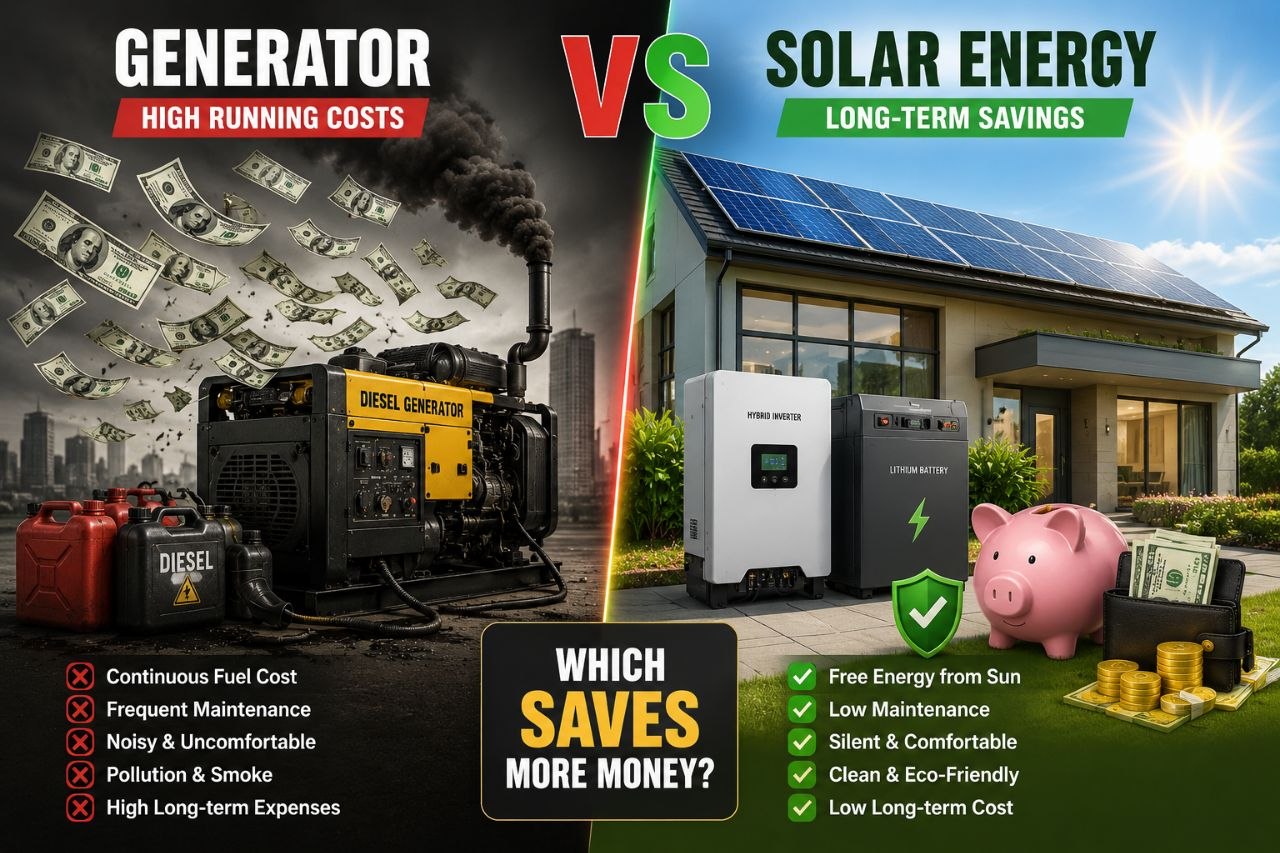
As Nigeria continues to grapple with erratic electricity supply, rising fuel prices, and increasing energy costs, many households and businesses are faced with a crucial question: Should they continue relying on fuel-powered generators or invest in solar energy?
For decades, petrol and diesel generators have been the primary alternative to public electricity. However, with the soaring cost of fuel and growing awareness of renewable energy, solar power is increasingly becoming the preferred choice for many Nigerians seeking a more reliable and cost-effective source of electricity.
The Cost Factor
One of the major reasons many people initially choose generators is their relatively low purchase price. A small generator can be purchased for a fraction of the cost of installing a complete solar power system.
However, energy experts warn that the initial purchase price tells only part of the story.
While a generator may be cheaper to acquire, it comes with continuous expenses such as fuel, engine oil, servicing, spare parts, and repairs. These recurring costs can become overwhelming, especially for households and businesses that depend on generators for several hours every day.
Solar systems, on the other hand, require a higher upfront investment because they include solar panels, batteries, an inverter, mounting structures, and professional installation. Once installed, however, the system generates electricity from sunlight at virtually no fuel cost.
Operating and Maintenance Costs
Generators require regular maintenance to remain efficient. Owners must frequently replace engine oil, spark plugs, air filters, and worn-out mechanical parts. Unexpected mechanical failures can also result in costly repairs and downtime.
Solar systems contain very few moving parts, making them significantly cheaper to maintain. Apart from occasional cleaning of the solar panels and routine inspection of the batteries and inverter, maintenance requirements are minimal.
Fuel Expenses Continue to Rise
Perhaps the biggest financial burden associated with generators is fuel.
With petrol and diesel prices increasing across Nigeria, many families and business owners now spend tens of thousands of naira monthly simply to keep their generators running.
Over several years, the total amount spent on fuel alone can exceed the original purchase price of the generator several times over.
Solar energy eliminates this recurring expense by using free energy from the sun, allowing users to save substantial amounts over the long term.
Reliability During Power Outages
Both generators and solar systems provide electricity during grid failures, but they operate differently.
Generators require fuel before they can function and often need to be started manually. They also produce significant noise and emit harmful exhaust fumes.
Solar systems equipped with battery storage automatically switch to stored power whenever public electricity fails, providing uninterrupted electricity without noise or emissions.
Protecting Valuable Appliances
Modern solar systems fitted with quality hybrid inverters supply stable electricity that helps protect expensive electronic devices such as televisions, computers, refrigerators, office equipment, medical devices, and security systems.
In contrast, poorly maintained generators may produce unstable voltage, increasing the risk of damage to sensitive appliances.
Environmental Benefits
Beyond financial savings, solar energy offers important environmental advantages.
Unlike fuel generators, which release carbon dioxide and other pollutants into the atmosphere, solar systems generate clean electricity without combustion. This helps reduce air pollution, noise pollution, and greenhouse gas emissions while contributing to global efforts to combat climate change.
Is Solar Perfect?
Despite its many advantages, solar energy is not without limitations.
The initial installation cost remains a major barrier for many Nigerians. In addition, batteries have a limited lifespan and eventually require replacement, which can be a significant expense.
Homes or businesses with heavy electricity demands—such as those operating multiple air conditioners, industrial machinery, or large pumping systems—may require larger and more expensive solar installations.
Performance can also be reduced during prolonged periods of cloudy or rainy weather, although battery storage helps to minimize interruptions.
The Hybrid Solution
Energy experts increasingly recommend a hybrid approach.
Under this arrangement, a solar system supplies most of the daily electricity needs, while a generator serves as a backup during periods of unusually high demand or extended bad weather.
This combination significantly reduces fuel consumption while ensuring reliable electricity throughout the year.
Verdict
Although generators remain useful for emergency backup, construction sites, and temporary events, relying solely on them has become increasingly expensive due to rising fuel and maintenance costs.
For homes and businesses planning for long-term energy independence, solar power offers substantial savings, lower maintenance costs, quieter operation, and a cleaner environment.
While the initial investment may be higher, experts say many users eventually recover their costs through reduced fuel purchases and lower electricity expenses.
As Nigeria’s energy challenges persist, solar energy is rapidly emerging not only as an environmentally friendly alternative but also as a smart financial investment for households and businesses looking to cut costs and secure reliable power.




Facebook Comments